11.1 Strategic Communication

Strategic communications is a deliberate effort to persuade an audience to adopt a particular viewpoint or take a desired action. To achieve this, communicators must first thoroughly understand their target audience, including their existing beliefs, values, and potential biases. This deep audience insight is crucial for tailoring the message and selecting the most effective delivery medium. For example, a campaign aimed at encouraging young adults to vote might utilize social media and influencers. At the same time, a public health message for an older demographic might prioritize television PSAs and community outreach.
Advertising (the subject of this chapter) and public relations (Chapter 12) are prime examples of strategic communication in action. Successful advertising campaigns, like the iconic “Got Milk?” campaign, do not just present information; they employ persuasive techniques, such as emotional appeals, endorsements, and humor, to encourage consumers to align with the advertiser’s point of view and, ultimately, make a purchase. Often, the most powerful persuasion happens when individuals feel they are freely choosing to agree with a message rather than being overtly coerced. Advertisers meticulously consider factors like imagery, language, and placement to maximize an ad’s persuasive impact. This art of persuasion, known as rhetoric, has been recognized since ancient times as one of the three classical areas of learning, alongside logic and grammar, highlighting its fundamental role in influencing thought and action.
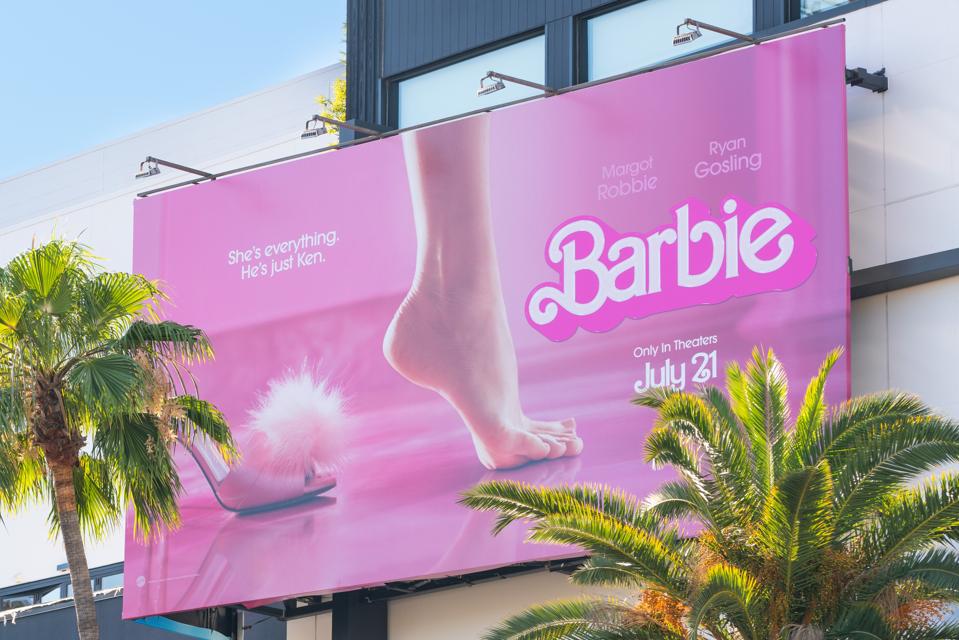
Developing effective advertising campaigns, supplemented by public relations, can be challenging. For instance, Warner Bros. and Mattel faced immense pressure as they developed a plan for the Barbie movie. The challenge was to transform a decades-old toy, often associated with outdated ideals, into a relevant, critically acclaimed, and successful cinematic experience for a diverse, modern audience. The answer lay in a masterclass of integrated marketing, where advertising and public relations worked together smoothly, painting the world pink and turning a film release into a cultural touchstone.
Barbie‘s advertising strategy was ubiquitous. From the earliest teasers, the campaign leaned heavily on the brand’s iconic visual language, particularly the color pink. Billboards, bus stops, and digital ads were saturated with this signature hue, often featuring minimalist designs that displayed only the release date, creating an immediate sense of anticipation. Trailer drops were meticulously timed, evolving from surreal nods to Stanley Kubrick’s 2001: A Space Odyssey to full-blown peeks into Barbie Land. Beyond traditional ad buys, the campaign executed an unprecedented number of brand collaborations. Companies ranging from fashion giants like Gap and Zara to essentials like Crocs, Airbnb, and even Burger King released Barbie-themed products. This was a pervasive marketing ecosystem that made the brand inescapable, turning everyday consumption into participation in the movie’s impending release.
Alongside this widespread advertising, a strong public relations strategy used earned media and organic buzz to elevate the film. The initial casting announcements of Margot Robbie and Ryan Gosling generated immediate excitement, while Greta Gerwig’s directorial involvement signaled artistic depth. Early set photos went viral, sparking countless memes and discussions. Perhaps the most significant PR coup was the “Barbenheimer” phenomenon—the unexpected, user-generated cultural mashup with Christopher Nolan’s Oppenheimer. This accidental synergy generated enormous free publicity, turning a potential box-office clash into a shared cinematic event. Furthermore, the film’s exploration of themes such as feminism and nostalgia provided fodder for numerous articles and interviews, extending the conversation far beyond its cinematic merits.
The Barbie campaign exemplifies the powerful synergy between advertising and public relations. Advertising laid the groundwork, creating visual saturation through paid placements. This paid media acted as a foundation, but it was the earned media generated by PR efforts—the viral moments, critical discussions, and the “Barbenheimer” phenomenon—that truly transformed the film into a global conversation.
The impact of strategic communication on the modern world is profound, primarily driven by the digital transformation of media. Advertising has adapted, using advanced data analytics for hyper-targeting. Beyond commercial objectives, advertising and PR wield significant influence in shaping political discourse and social movements. They are not merely tools for selling products but powerful mechanisms for communicating values and navigating the complexities of a globalized, digitally mediated society.