
4.2 History of Newspapers and Magazines
Over its long and complex history, the print industry has undergone many transformations. Examining the historical roots of newspapers and magazines can help shed light on how and why they have evolved into a multifaceted medium.
Scholars commonly credit the ancient Romans with publishing the first newspaper-like product, the Acta Diurna, or “daily doings,” in 59 BCE. Carved on stone or metal and presented on message boards in public places, such as the Roman Forum, these records, historians speculate, were used by the Romans to publish chronicles of events, assemblies, births, deaths, and daily gossip.
In 1566, another ancestor of the modern newspaper appeared in Venice, Italy. These handwritten avisi, or gazettes, focused on politics and military conflicts. However, the absence of printing press technology greatly limited the circulation of the Acta Diurna and the Venetian papers.

As discussed in the previous chapter, Johannes Gutenberg’s printing press drastically changed the face of publishing. In 1440, Gutenberg invented a movable-type press that enabled the high-quality reproduction of printed materials at nearly 4,000 pages per day, or 1,000 times as much as a scribe could complete by hand. This innovation drove down the price of printed materials and, for the first time, made them accessible to a mass market. Overnight, the new printing press transformed the scope and reach of the newspaper, paving the way for modern-day journalism.
European Roots
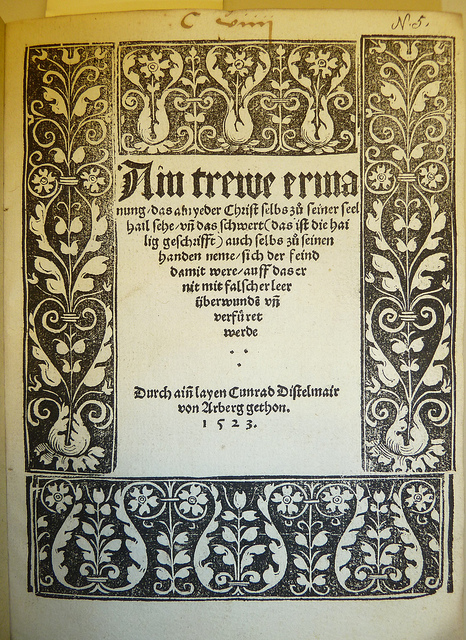
The first weekly newspapers to employ Gutenberg’s press emerged in 1609. Although the papers—Relations: Aller Furnemmen, printed by Johann Carolus, and Aviso Relations over Zeitung, printed by Lucas Schulte—did not name their cities of publication to avoid government persecution, their use of German helped identify their approximate locations. Despite these concerns over persecution, the papers proved successful, and newspapers quickly spread throughout Central Europe. Over the next five years, weeklies popped up in Basel, Frankfurt, Vienna, Hamburg, Berlin, and Amsterdam. In 1621, England printed its first paper under the title Corante, or weekely newes from Italy, Germany, Hungary, Poland, Bohemia, France and the Low Countreys. By 1641, almost every country in Europe had a newspaper, as the printing press had spread to France, Italy, and Spain.
These early newspapers followed one of two major formats. The Dutch-style corantos densely packed reading material into a two- to four-page paper, while the German-style pamphlet (or broadside) offered a more expansive eight- to 24-page paper. Many publishers began printing in the Dutch format, but as their popularity grew, they changed to the larger German broadside style.
Forerunners of the familiar modern magazine first appeared in the 17th century as brochures, pamphlets, and almanacs. Soon, publishers realized that irregular publication schedules required too much time and energy. A gradual shift then occurred as publishers sought regular readers with specific interests. However, the early magazine differed from previous publications. It did not provide a variety of news stories like a newspaper, but it also lacked the characteristics of pleasure reading. Instead, early magazines occupied the middle ground between the two.

German theologian and poet Johann Rist published the first actual magazine between 1663 and 1668. Titled Erbauliche Monaths-Unterredungen, or Edifying Monthly Discussions, Rist’s publication inspired several others to begin printing literary journals across Europe: Denis de Sallo’s French Journal des Sçavans, the Royal Society’s English Philosophical Transactions, and Francesco Nazzari’s Italian Giornale de’letterati. In 1684, the exiled Frenchman Pierre Bayle published Novelles de la République des Lettres in the Netherlands to escape French censorship. Profoundly influenced by the general revival of learning during the 1600s, these publications inspired enthusiasm for education.
Another Frenchman, Jean Donneau de Vizé, published the first “periodical of amusement,” Le Mercure Galant (later renamed Mercure de France), in 1672, which contained news, short stories, and poetry. This combination of news and pleasurable reading became incredibly popular, causing other publications to imitate the magazine. This lighter magazine catered to a different reader than did the other, more intellectual publications of the day, offering articles for entertainment and enjoyment rather than for education.
With the arrival of the 18th century came an increase in literacy. Women, who enjoyed a considerable rise in literacy rates, began reading in record numbers. This growth had a profound impact on the literary world as a whole, inspiring many female writers to publish novels specifically for female readers. This influx of female readers also helped magazines flourish, as more women sought them out for knowledge and entertainment. Many magazines seized the opportunity to target women. The Athenian Mercury, the first magazine written specifically for women, appeared in 1693.
Early British Magazines
Much as in newspaper publication, Great Britain closely followed continental Europe’s lead in producing magazines. During the early 18th century, three major influential magazines were published regularly in Great Britain: Daniel Defoe’s The Review, Sir Richard Steele’s The Tatler, and Joseph Addison and Steele’s The Spectator.
All three of these publications reached their audiences daily or several times a week. While they reached readers as frequently as newspapers, their content differed. The Review focused primarily on domestic and foreign affairs, featuring opinion-based political articles. The Spectator replaced the Tatler, which was published from 1709 to 1711. Both Tatler and Spectator emphasized living and culture, frequently using humor to promote virtuous behavior. Tatler and Spectator, in particular, drew a large number of female readers, and both magazines eventually introduced female-targeted publications: the Female Tatler in 1709 and the Female Spectator in 1744.

In the bustling intellectual landscape of 18th-century London, a quiet revolution was brewing, spearheaded by Edward Cave. His brainchild, The Gentleman’s Magazine, wasn’t just another publication; it was a pioneering endeavor that forever changed the way information was disseminated.
Cave, a printer and editor with an astute eye for innovation, sought a new way to consolidate the diverse array of news, essays, poems, and debates that typically circulated in individual pamphlets and newspapers. He envisioned a single, comprehensive repository for all this disparate content, a veritable “storehouse of knowledge.” It was this very concept that led him to christen his publication a “magazine.”
At the time, the word magazine held a more literal meaning, rooted in its French and Arabic origins: a physical place where goods, provisions, or military supplies were stored or sold. Think of a well-stocked armory or a bustling mercantile warehouse – a place where one could find a variety of essential items. Cave ingeniously repurposed this term, applying it metaphorically to his printed collection. The Gentleman’s Magazine was, in essence, a literary emporium, a place where readers could find a curated selection of intellectual provisions, all conveniently gathered under one cover.
Thus, with its inaugural issue in 1731, The Gentleman’s Magazine not only offered a groundbreaking format for information, but it also cemented a new meaning for an old word, forever linking the word magazine with the vibrant, eclectic world of periodicals known today.
Government Control and Freedom of the Press
Because the government regulated many of these early publications, they did not report on local news or events. However, civil war broke out in England in 1641. As Oliver Cromwell and Parliament threatened and eventually overthrew King Charles I, citizens turned to local papers for coverage of these major events. In November 1641, a weekly paper titled The Heads of Severall Proceedings in This Present Parliament began focusing on domestic news. The paper fueled a discussion of freedom of the press that John Milton later articulated in his 1644 treatise Areopagitica.

Although the arguments in Areopagitica focused primarily on Parliament’s ban on certain books, it also addressed newspapers. Milton criticized the tight regulations on their content by stating, “Who kills a man kills a reasonable creature, God’s image; but he who destroys a good book, kills reason itself, kills the image of God, as it were in the eye.” Despite Milton’s emphasis on texts rather than on newspapers, the treatise had a major effect on printing regulations. In England, newspapers were freed from government control, and people began to understand the power of a free press.
Papers took advantage of this newfound freedom and began publishing more frequently. With biweekly publications, papers had additional space to run advertisements and market reports. This changed the role of journalists from simple observers to active players in commerce, as business owners and investors grew to rely on the papers to market their products and predict business developments. Once publishers noticed the growing popularity and profit potential of newspapers, they founded daily publications. In 1650, a German publisher began printing the world’s oldest daily paper, Einkommende Zeitungen, and an English publisher followed suit in 1702 with London’s Daily Courant. Such daily publications, which employed the relatively new format of headlines and embellished illustrations, turned papers into vital fixtures in the everyday lives of citizens.
Printing in Colonial America

Newspapers did not come to the American colonies until September 25, 1690, when Benjamin Harris printed Publick Occurrences, Both FORREIGN and DOMESTICK. Harris had worked as a newspaper editor in England before fleeing to America after he published an article about a purported Catholic plot against England. The first article printed in his new colonial paper stated, “The Christianized Indians in some parts of Plimouth, have newly appointed a day of thanksgiving to God for his Mercy.” The other articles in Publick Occurrences, however, shared similarities with Harris’s previously more controversial style (for instance, he suggested King William “used to lie with the Son’s Wife”). The publication folded after just one issue, and the government ordered all copies to be destroyed.
Fourteen years passed before the next American newspaper, The Boston News-Letter, was launched. Fifteen years after that, the Boston Gazette began publication, followed immediately by the American Weekly Mercury in Philadelphia. Trying to avoid following in Harris’s footsteps, these early papers carefully eschewed political discussion to avoid offending colonial authorities. After a lengthy absence, politics reentered American papers in 1721, when James Franklin published a criticism of smallpox inoculations in the New England Courant. The following year, the paper accused the colonial government of failing to protect its citizens from pirates, which resulted in Franklin’s imprisonment.
After Franklin offended authorities once again for mocking religion, a court dictated that he could no longer “print or publish The New England Courant, or any other Pamphlet or Paper of the like Nature, except it be first Supervised by the Secretary of this Province.” Immediately following this order, Franklin turned over the paper to his younger brother, Benjamin. Benjamin Franklin, who went on to become a renowned statesman and played a pivotal role in the American Revolution, also had a substantial impact on the printing industry as the publisher of The Pennsylvania Gazette and the creator of subscription libraries.
Journalism and news reporting during the colonial period in American history differed significantly from modern practices. Early newspapers were primarily concentrated in port cities like Boston, New York, Philadelphia, and Charleston, serving as vital sources of information for merchants and the business community. These publications typically prioritized business news, shipping reports, and advertisements, reflecting the colonies’ economic focus. However, the number of newspapers was limited in the early colonial period, and many struggled to survive financially due to high production costs, limited distribution networks, government censorship, and intensifying competition.
The newspapers of the time did not resemble their modern counterparts. Objective coverage was rare, and many publications openly expressed partisan viewpoints, which could be considered libelous by today’s standards. Colonial papers sometimes included satire, literary excerpts, poetry, and even serialized fiction. They often focused on stories that concerned trade, British politics, and European affairs, though as the colonies matured, local news became more prevalent. While newspapers were more accessible to wealthier and more educated colonists, they were also read by a broader segment of society, including merchants, clergy, and some artisans and tradespeople; however, limited literacy and high costs restricted their wider circulation.
As the American Revolution drew near, newspapers became increasingly partisan, serving as vital tools for disseminating political ideologies. Patriot publications, such as Isaiah Thomas’s The Massachusetts Spy and the Journal of Occurrences, helped inform colonists about perceived British misdeeds and rallied support for resistance, often aligning with the activities of groups like the Sons of Liberty. On the Loyalist (Tory) side, newspapers such as James Rivington’s Royal Gazette defended British policies and the authority of the Crown. While some colonists initially sought reconciliation and greater representation within the existing British system, this position became increasingly untenable as tensions escalated. As the revolution drew closer, Loyalist papers faced growing hostility, threats, and even violence, leading to the closure of some publications. At the same time, Patriot newspapers gained significant influence and fueled the revolutionary movement.

The Trial of John Peter Zenger
Political discussions began to appear in other newspapers around the colonies. In 1733, John Peter Zenger founded The New York Weekly Journal. Zenger’s paper soon began criticizing the newly appointed colonial governor, William Cosby, who had replaced members of the New York Supreme Court when he could not control them. In late 1734, Cosby had Zenger arrested, claiming that his paper contained “divers scandalous, virulent, false and seditious reflections.” Eight months later, prominent Philadelphia lawyer Andrew Hamilton defended Zenger in a groundbreaking trial. Hamilton compelled the jury to consider the truth and determine whether Zenger had printed factual statements. Ignoring the judge’s disapproval of Zenger and his actions, the jury returned a not-guilty verdict after only a short deliberation. Zenger’s trial resulted in two significant developments in the march toward press freedom. First, the prosecution demonstrated to the papers that they could potentially print honest criticism of the government without fear of retribution. Second, the British became afraid that an American jury would never convict an American journalist.
With Zenger’s verdict providing more freedom to the press, some began to call for emancipation from England, and newspapers became their conduit for political discussion.
The Birth of American Magazines
The first American magazines debuted in 1741, when Andrew Bradford’s American Magazine and Benjamin Franklin’s General Magazine began publication in Philadelphia, a mere three days apart from each other. Neither magazine lasted long, however; American Magazine folded after only three months and General Magazine after six. The short-lived nature of the publications likely had less to do with the outlets themselves and more to do with the fact that they faced “too few readers with leisure time to read, high costs of publishing, and expensive distribution systems.” Despite this early setback, magazines began to flourish during the latter half of the 18th century, and by the end of the 1700s, more than 100 magazines had emerged in the nascent United States. Despite this prominent publication status, typical colonial magazines still recorded low circulation, and audiences considered the available material highbrow.
Freedom of the Press in the Early United States
The Stamp Act of 1765, which imposed a tax on various paper goods, including newsprint, created significant economic hardship for colonial newspapers. While the British government claimed to tax the physical paper rather than the ideas it contained, the act was widely seen as an attempt to suppress dissent. Some newspapers temporarily suspended publication in protest, while others continued to publish, sometimes defying the tax outright.
In 1791, the nascent United States of America adopted the First Amendment as part of the Bill of Rights. This act states that “Congress shall make no law respecting an establishment of religion, or prohibiting the free exercise thereof; or abridging the freedom of speech, or of the press; or the right of the people peaceably to assemble, and to petition the government for a redress of grievances.” In this one sentence, U.S. law formally guaranteed freedom of the press. The Stamp Act’s impact on the Founding Fathers in creating this legislation cannot be overstated. It solidified the notion that a free press is essential for a functioning democracy and catalyzed the American Revolution.
However, as a reaction to harsh partisan writing, Congress passed the Alien and Sedition Act in 1798, which declared that “writing, printing, uttering, or publishing any false, scandalous and malicious writing or writings against the government of the United States” was punishable by fine and imprisonment. When Thomas Jefferson won the presidency in 1800, he allowed the Sedition Act to lapse, claiming the country would undergo “a great experiment…to demonstrate the falsehood of the pretext that freedom of the press is incompatible with orderly government.” This free press experiment has continued to the present day.

As late as the early 1800s, newspapers still incurred substantial printing costs. Although daily papers had become more common and provided merchants with up-to-date, vital trading information, most cost about 6 cents per copy, well above what artisans and other working-class citizens could afford. As such, newspaper readership did not extend beyond the elite.

All that changed in September 1833 when Benjamin Day created The Sun. Printed on small, letter-sized pages, The Sun sold for just a penny. With the Industrial Revolution in full swing, Day employed the new steam-driven, two-cylinder press to print The Sun. While the old printing press could print approximately 125 newspapers per hour, this improved version could print approximately 18,000 copies per hour. As he reached out to new readers, Day knew he wanted to alter the concept of news, which had featured heavily inflammatory partisan commentary up to that point. He printed the paper’s motto at the top of every front page of The Sun: “The object of this paper is to lay before the public, at a price within the means of every one, all the news of the day, and at the same time offer an advantageous medium for advertisements.”
The Sun sought out stories that would appeal to the new mainstream consumer. As such, the paper primarily published human-interest stories and police reports. Additionally, Day left ample room for advertisements. Day’s adoption of this new format and industrialized method of printing proved highly successful. The Sun became the first paper of what became known as the penny press. Before the emergence of the penny press, the most popular paper, New York City’s Courier and Enquirer, had sold 4,500 copies per day. By 1835, The Sun sold 15,000 copies per day.
The Sun would eventually compete with another early successful penny paper, James Gordon Bennett’s New York Morning Herald, which debuted in 1835. Bennett made his mark on the publishing industry by offering nonpartisan political reporting. He also introduced more aggressive methods for gathering news, hiring both interviewers and foreign correspondents. His paper became the first to send a reporter to a crime scene to witness an investigation. In the 1860s, Bennett hired 63 war reporters to cover the U.S. Civil War. Although the Herald initially emphasized sensational news, it later became one of the country’s most respected papers for its accurate reporting.

The abolitionist press played a vital role in the anti-slavery movement in the United States from the 1830s to the Civil War. It served as a crucial platform for disseminating anti-slavery ideas, mobilizing public opinion, and organizing abolitionist activities. Unlike the mainstream press of the time, which often ignored or even supported slavery, the abolitionist press provided a powerful counter-narrative, exposing the horrors of slavery and advocating for its immediate abolition.
The abolitionist press attempted to appeal to the public’s conscience by highlighting the moral and religious wrongness of slavery. They published narratives of enslaved people, accounts of the brutality of slavery, and arguments grounded in spiritual and ethical principles across a wide range of publications, from weekly newspapers to pamphlets and books. It included voices from both Black and white abolitionists, as well as men and women. Compared to more moderate anti-slavery efforts, the abolitionist press often took a radical stance, demanding immediate and unconditional emancipation. This radicalism usually put them at odds with both pro-slavery forces and more gradualist anti-slavery advocates.

Freedom’s Journal, founded in New York City by John Russwurm and Samuel Cornish, is considered the first African American-owned and operated newspaper in the United States. It addressed issues of slavery and racial discrimination, providing a platform for Black voices and perspectives. Though short-lived, it set a precedent for future Black-owned newspapers and played a crucial role in early Black activism.
William Lloyd Garrison’s The Liberator, published in Boston, became one of the most influential and uncompromising voices in the abolitionist movement. Garrison’s advocacy for immediate emancipation made him a controversial figure, but his newspaper played a pivotal role in galvanizing the abolitionist cause. Frederick Douglass, a formerly enslaved man and powerful orator, established The North Star in Rochester, New York. His newspaper provided a crucial platform for Black perspectives on slavery and other social issues. Douglass’s eloquent writing and powerful arguments made The North Star a leading voice in the abolitionist movement.
Abolitionist publishers faced significant challenges, including financial difficulties, censorship, and violent attacks. Presbyterian minister Elijah Lovejoy published the Alton Observer in Alton, Illinois, a border state with strong pro-slavery sentiment. Lovejoy’s outspoken condemnation of slavery made him a target of pro-slavery mobs. He lost his life in 1837 while defending his printing press from an angry mob, becoming a martyr for the abolitionist cause and freedom of the press.
Despite such setbacks, the Abolitionist Press laid the groundwork for the Civil War and demonstrated the power of the press to challenge injustice and advocate for social change.
Growth of Wire Services and Printing Capacity
Another major historical technological breakthrough for newspapers came when Samuel Morse helped improve the electric telegraph in 1837. Newspapers turned to emerging telegraph companies to receive up-to-date news briefs from cities across the globe. The significant expense of this service led to the formation of the Associated Press (AP) in 1846 as a cooperative arrangement of five major New York papers: the New York Sun, the Journal of Commerce, the Courier and Enquirer, the New York Herald, and the Express. The success of the Associated Press led to the development of wire services between major cities. According to the AP, this meant that editors were able to “actively collect news as it breaks, rather than gather already published news.” This collaboration between papers allowed for more reliable reporting, and the increased breadth of subject matter lent subscribing newspapers mass appeal for not only upper- but also middle- and working-class readers.
The invention of the steam-powered printing press in the early 19th century revolutionized the newspaper industry, drastically increasing production speed and lowering costs. Before this innovation, printing relied on hand-operated presses, a slow, laborious process that limited the circulation and availability of newspapers. The steam press, pioneered by figures like Friedrich Koenig, automated the printing process, allowing hundreds, and eventually thousands, of pages to be printed per hour.
This technological leap had profound consequences for journalism. Increased printing speed enabled newspapers to reach a much wider audience, leading to the rise of mass-circulation newspapers and the emergence of the Penny Press. Lower production costs made newspapers more affordable, expanding readership beyond the elite and fostering greater public access to information. This broader dissemination of news contributed to higher literacy rates and a more informed public discourse. The steam press also enabled newspapers to include more content, leading to larger and more comprehensive publications. With the growth of railroads and steamboats, news could now travel more quickly than ever.

Yellow Journalism
In the late 1800s, Joseph Pulitzer, publisher of the New York World, developed a new journalistic style that relied on intensified sensationalism—stories focused on crime, violence, emotion, and sex. Although he made major strides in the newspaper industry by creating an expanded section focusing on women and pioneering the use of advertisements as news, Pulitzer relied primarily on violence and sex in his headlines to sell more copies. Ironically, journalism named its most prestigious award after him. His New York World became famous for such headlines as “Baptized in Blood” and “Little Lotta’s Lovers.” This sensationalist style served as the forerunner for today’s tabloids. Editors relied on shocking headlines to sell their papers, and although investigative journalism filled their pages, they often took liberties in how they told the story. Newspapers usually printed an editor’s interpretation of the story without maintaining objectivity.
At the same time Pulitzer had established the New York World, William Randolph Hearst—an admirer and principal competitor of Pulitzer—took over the New York Journal. The battle between these two major New York newspapers escalated as Pulitzer and Hearst attempted to outdo one another. The papers slashed their prices back down to a penny, stole editors and reporters from each other, and filled their papers with outrageous, sensationalist headlines. Both shared a passion for motivating the United States to go to war with Spain, and they succeeded with the declaration of the Spanish-American War. Both Hearst and Pulitzer filled their papers with huge front-page headlines and gave bloody—if sometimes inaccurate—accounts of the war. As historian Richard K. Hines writes, “The American Press, especially ‘yellow presses’ such as William Randolph Hearst’s New York Journal [and] Joseph Pulitzer’s New York World … sensationalized the brutality of the reconcentrado and the threat to American business interests. Journalists frequently embellished Spanish atrocities and invented others.” Hearst’s life partially inspired the 1941 classic film Citizen Kane.
Kid Blink’s Uprising: How Newsies Took on Giants

Newsies were a ubiquitous presence in American cities during the late 19th and early 20th centuries. These young children, primarily boys, hawked newspapers on street corners, shouting headlines and vying for the attention of passersby. They played a vital part in distributing newspapers, particularly for evening editions, and their cries were a familiar soundtrack of urban life.
Life as a newsie was far from glamorous. The children worked long hours, often in harsh weather conditions, for meager earnings. Newsies typically purchased newspapers from publishers at wholesale and then resold them for a small profit. This meant they bore the risk of unsold papers, which cut into their already slim earnings.
In 1899, this precarious existence led to the Newsboys Strike in New York City. Led by Kid Blink (Louis Baletti), a charismatic young newsie with a legendary eye patch, the strike was sparked by a price increase imposed by influential publishers Joseph Pulitzer and William Randolph Hearst. Pulitzer’s New York World and Hearst’s New York Journal had been engaged in a fierce circulation war, driving down newspaper prices to attract readers. However, when the Spanish-American War ended, they colluded to raise the price they charged newsies, squeezing their already tight margins.
The newsies, many of whom were impoverished and homeless, organized a strike, refusing to sell the World and Journal. They formed a union, held rallies, and even disrupted the publishers’ distribution efforts. The strike garnered public sympathy and media attention, putting pressure on the publishers to negotiate.
After two weeks, the strike ended in a partial victory for the newsies. While they didn’t achieve a complete rollback of the price increase, they won a significant concession: the right to return unsold papers for a refund. This reduced their financial risk and improved their working conditions.
The Newsboys Strike of 1899 is a remarkable example of child labor activism and the power of collective action. It highlights the struggles faced by working children in the Industrial Age and their ability to organize and fight for their rights. The strike also highlights the role of newspapers in shaping public discourse and the power of public opinion to influence even the most powerful media moguls.

Comics and Stunt Journalism

As the publishers vied for readership, newspapers introduced an entertaining new element to their pages: the comic strip. In 1896, Hearst’s New York Journal published R. F. Outcault’s The Yellow Kid in an attempt to “attract immigrant readers who otherwise might not have bought an English-language paper.” Readers rushed to buy papers featuring the successful, yellow nightshirt-wearing character. The cartoon “provoked a wave of ‘gentle hysteria,’ and soon began to appear on buttons, cracker tins, cigarette packs, and ladies’ fans—and even as a character in a Broadway play.” The cartoon’s popularity gave rise to the term yellow journalism to describe the types of papers in which it appeared.
Pulitzer responded to the success of the Yellow Kid by introducing a new form of journalism, known as stunt journalism. The publisher hired journalist Elizabeth Cochrane, who wrote under the name Nellie Bly, to report on aspects of life that the publishing industry had previously ignored. Her first article focused on the New York City Lunatic Asylum on Blackwell Island. Bly feigned insanity and had herself committed to the infamous asylum. She recounted her experience in her first article, “Ten Days in a Madhouse.” “It was a brilliant move. Her madhouse performance inaugurated the performative tactic that would become her trademark reporting style.”
Such articles brought Bly much notoriety and fame, and she became known as the first stunt journalist. Some considered her stunts lowbrow entertainment, and more traditional journalists often criticized female stunt reporters. Regardless, Pulitzer’s decision to hire Bly represented a huge step for women in the newspaper business. Bly and her fellow stunt reporters “were the first newspaperwomen to move, as a group, from the women’s pages to the front page, from society news into political and criminal news.”
Despite the sometimes questionable tactics of both Hearst and Pulitzer, each made significant contributions to the growing journalism industry. By 1922, Hearst, a ruthless publisher, had created the country’s largest media holding company. At that time, he owned 20 daily papers, 11 Sunday papers, two wire services, six magazines, and a newsreel company. Likewise, toward the end of his life, Pulitzer turned his focus to establishing a school of journalism. In 1912, a year after his death and 10 years after Pulitzer had initiated his educational campaign, classes were established at the Columbia University School of Journalism. At the time of its opening, the school had approximately 100 students from 21 countries. Additionally, in 1917, the Pulitzer Prize awarded its first accolades for excellence in journalism.
Mass-Appeal Magazines
Magazines gained popularity in the United States in the 1830s, when publishers took advantage of a general decline in printing and mailing costs and began producing less expensive magazines aimed at a wider target audience. Magazine style also transformed. While early magazines focused on improvement and reason, later versions shifted their focus to amusement. Magazines no longer focused on the elite class. Publishers took advantage of their newly expanded audience by offering family, children’s, and women’s magazines. Women’s publications again proved especially lucrative. Godey’s Lady’s Book, a Philadelphia-based monthly published between 1830 and 1898, reached out to female readers by employing nearly 150 women.
Muckraking

Born of the tumultuous late 19th and early 20th centuries, muckraking emerged as a distinctive and potent force in American journalism, spanning roughly from the 1870s to the 1920s. This American-English term, famously coined in 1906 by President Theodore Roosevelt—who drew inspiration from a character in John Bunyan’s Pilgrim’s Progress—referred to those intrepid investigators who delved into and exposed the insidious roots of corruption in society.
Muckraking wasn’t merely about reporting facts. Publications would embark on ambitious “crusades” to eradicate pressing social problems. This journalistic offensive typically followed a three-step process: first, discovering a pressing social ill; second, writing about it repeatedly and relentlessly, shining a persistent light on the issue; and finally, through this sustained public pressure, forcing the government to intervene and implement solutions.
Among the most formidable figures of this era was Samuel McClure, whose McClure’s Magazine became a prominent platform for articles dissecting the shadowy dealings of the insurance industry, the monopolistic practices of railroads, and the pervasive rot of government corruption. One of McClure’s most celebrated contributors was Ida May Tarbell, whose groundbreaking investigation into the monolithic Standard Oil Company trust remains a landmark of investigative journalism.
Lincoln Steffens, who began his career at the New York Sun, was another titan of muckraking. Working the police beat, he witnessed firsthand the brutal realities of officer misconduct, fueling his outrage. His most renowned work, The Shame of the Cities, unflinchingly exposed the deep-seated problems plaguing numerous American urban centers and the rampant corruption among elected officials. Upton Sinclair, a prolific writer with over 80 books to his name, penned the iconic novel The Jungle, which graphically depicted the horrific conditions in the meatpacking industry, and also delved into the intricacies of the oil and coal industries.

Beyond the written word, the visual medium also served as a powerful tool for muckraking. Cartoonist Thomas Nast stands out, celebrated for two enduring legacies: his definition of the modern image of Santa Claus and his scathing political cartoons targeting the notoriously corrupt New York Democratic Party leader, Boss Tweed, and his Tammany Hall machine. So impactful were Nast’s visual indictments that President Grant, in 1869, famously declared, “Two things elected me. The sword of Sheridan and the pencil of Nast.” Boss Tweed, whose reign of corruption in 1871 is estimated to have siphoned between $25 million and $45 million (and potentially as high as $200 million, or $5 billion in 2023 dollars) from New York City taxpayers, was eventually brought to justice, a testament to the power of such relentless scrutiny.
The popularity of muckraking was deeply rooted in the socio-economic conditions of the late 19th and early 20th centuries. The 1890s saw a significant decline in average American incomes and an increase in unemployment. The average work week stretched to a grueling 60 hours, while typical weekly salaries hovered between a meager $6 and $10. Industrialization, while bringing progress, also fostered the rise of powerful trusts that ruthlessly cornered markets and inflated prices, further squeezing the working class. This era was also characterized by a relatively weak federal government, with a line of presidents from Lincoln to Roosevelt often limiting intervention in the affairs of big business, leaving a void that muckrakers were eager to fill by holding power accountable through the unflinching gaze of their investigations.
The Saturday Evening Post

The Saturday Evening Post became the first truly successful mass-circulation magazine in the United States. This weekly magazine first began printing in 1821 and remained in regular print production until 1969, when it briefly ceased circulation. However, in 1971, a new owner remodeled the magazine to focus on health and medical breakthroughs. From its first publication in the early 1800s, The Saturday Evening Post quickly gained popularity; by 1855, it had a circulation of 90,000 copies per year. Widely recognized for transforming the magazine’s look, the publication became the first to use artwork on its cover, a decision that The Saturday Evening Post has said “connected readers intimately with the magazine as a whole.” Indeed, the Saturday Evening Post took advantage of the format by featuring the work of famous artists such as Norman Rockwell. Using such recognizable artists boosted circulation as “Rockwell’s illustrations thrived in popularity, growing out from basic themes of a simpler time. His art looked up to an ideal: the perfect everyday lives Americans wished they could live.”
But The Saturday Evening Post did not only feature famous artists; it also published works by well-known authors, including F. Scott Fitzgerald, Sinclair Lewis, and Ring Lardner. The popularity of these writers contributed to the magazine’s continued success.
Youth’s Companion
The Youth’s Companion represents another early U.S. mass magazine, published between 1827 and 1929, until it merged with The American Boy. Based in Boston, Massachusetts, this periodical featured fairly religious content and developed a reputation as a wholesome magazine that encouraged young readers to lead virtuous and pious lives. Eventually, the magazine sought to reach a larger, adult audience by including tame entertainment pieces. Nevertheless, the magazine, as its circulation increased, began featuring the work of prominent writers for both children and adults, including Louisa May Alcott, Emily Dickinson, Mark Twain, Helen Keller, and Theodore Roosevelt.
Price Decreases Attract Larger Audiences
While magazines such as The Saturday Evening Post and Youth’s Companion proved pretty popular, the industry still struggled to achieve widespread circulation. Most publications cost the then-hefty sum of 25 or 35 cents per issue, limiting readership to the relatively few who could afford them. This all changed in 1893 when Samuel Sidney McClure began selling McClure’s Magazine, originally a literary and political magazine, at the bargain price of only 15 cents per issue. The trend caught on. Soon, Cosmopolitan began selling for 12.5 cents, while Munsey Magazine sold for only 10 cents. All three of these periodicals enjoyed wide success. Frank A. Munsey, owner of Munsey Magazine, estimated that between 1893 and 1899 “the ten-cent magazine increased the magazine-buying public from 250,000 to 750,000 persons.” For the first time, magazines could sell for less than they cost to produce. Due to increased circulation, publications could charge higher advertising rates while lowering costs to customers.
By 1900, advertising had become a crucial component of the magazine business. In the early days of the industry, many publications attempted to exclude advertisements from their issues due to publishers’ natural fondness for literature and writing. However, once circulation increased, advertisers sought out space in magazines to reach a larger audience. Magazines responded by raising advertising rates, ultimately increasing their profitability. By the turn of the 20th century, advertising became the primary source of income for most magazines. This trend becomes particularly noticeable in some women’s magazines, where advertisements account for nearly half of all content.
Due to the significant costs associated with printing and mailing publications, magazines initially targeted only regional audiences, thereby limiting their ability to influence broader audiences. Not until these expenses declined and advertising revenues increased could magazine owners justify the cost of mass circulation.
Advertising for a National Market

The late 19th century witnessed a surge in mass circulation for the U.S. magazine industry. This meant that magazines that had once targeted only a small part of the country suddenly began reaching a nationwide audience. In addition to the apparent benefit of increased magazine revenue, this shift to broad circulation led to an interesting phenomenon: the emergence of national trends. For the first time in U.S. history, mass circulation enabled the widespread diffusion and advertisement of news, stories, consumer goods, and fashions to audiences, rather than just regional ones. The mass circulation of magazines united the country, as geographically diverse consumers read the same stories and saw the same advertisements.
Due to this growth in readership, advertisements became increasingly vital to the magazine industry. Advertisers sought to reach a large audience, and magazines willingly afforded them that opportunity, selling advertising space at higher rates. One business manager of Scribner’s Monthly, an early popular magazine, solicited advertisements by discussing the readership boom:
The publishers of Scribner’s Monthly will insert in each number of the magazine certain pages devoted to advertisements of a character likely to interest magazine readers. These will not increase the postage, while significantly enhancing the publishers’ ability to make their magazines readable and attractive. The pressure of advertisements in our first number shows how quickly the business public recognizes the claims of the new magazine. Our edition will be huge, and it will have a national circulation. It is now well understood that a first-class popular magazine furnishes to all men who seek a national market the very best medium for advertising that exists.
For the first time, publishers and advertisers could access a national market. By the 1930s, market research had become the norm for periodicals, as magazines and advertisers sought to better understand what readers wanted in their publications. However, market research has its limits; many publishers instead embraced magazines’ potential to tell people what they want or need, thus solidifying magazines’ role as drivers of popular culture. As one editor of Vogue articulated: “If we find out what people want, it’s already too late.”
Popular Literature in Magazines

Magazines offered a place not only for advertisers but also for authors and poets to reach a large audience. Several publications regularly hired both new and established authors to write stories. As circulation increased, so did the desire for these authors to publish their work.
Literary magazines enjoyed a boom during the 19th century, publishing some of the period’s most important fiction. At some point, nearly every important American writer contributed to literary magazines; for example, Edgar Allan Poe, Mark Twain, Walt Whitman, and Ernest Hemingway all published in periodicals throughout their careers. Even writers working outside the country, such as Ezra Pound and James Joyce, sought out U.S. magazines to publish works that faced censorship in their native countries.
Just as magazines offered authors a chance to display their writing to a large audience, they also allowed readers a taste of available literature. Even today, magazines often print excerpts from books, providing readers with a preview of the complete text. Portions of literary classics, including Uncle Tom’s Cabin, Walden, Moby-Dick, The Adventures of Tom Sawyer, The Adventures of Huckleberry Finn, and Ulysses, debuted in magazines. Some novels—such as Edgar Rice Burroughs’s Tarzan of the Apes, John Hersey’s Hiroshima, and Ernest Hemingway’s The Old Man and the Sea—even appeared in magazines in full before publication in book form. The opportunity to publish in magazines has provided invaluable opportunities for authors, but literary publications have also proved essential for the development of American culture. In publishing literary texts, journals have promoted now-classic stories, such as the previously mentioned examples, that have defined American literary history and shaped the U.S. narrative.
Early 20th-Century Developments
The arrival of the 20th century brought with it new types of magazines, including news, business, and picture magazines. In time, these types of publications came to dominate the industry and attract vast readerships.
Newsmagazines

As publishers became interested in succinctly presenting the rapid increase in worldwide information made available by technology during the late 19th and early 20th centuries, they designed the news magazine. In 1923, Time became the first news magazine to focus on world news. Time first began publication with the proposition that “people are uninformed because no publication has adapted itself to the time which busy men are able to spend simply keeping informed.” Although the periodical struggled during its early years, Time hit its stride in 1928, and its readership grew. The magazine’s signature style, characterized by well-researched news presented succinctly, contributed significantly to its eventual success.
Several other news magazines entered the market during this era as well. Business Week debuted in 1929, focusing on the global market. Forbes, currently one of the most popular financial magazines, began printing in 1917 as a biweekly publication. In 1933, a former Time foreign editor founded Newsweek. Today, Newsweek and Time continue to compete, furthering a trend that began in Newsweek’s early years.

Picture Magazines
Photojournalism, the art of telling stories through photography, also gained popularity during the early 20th century. Joseph Nicéphore Niépce ignited the nascent spark of photojournalism in 1826 by capturing the world’s first photograph. Yet, for decades, images such as these remained largely absent from the daily news, their widespread integration into newspapers awaiting the tumultuous conclusion of a conflict that would forever alter the American landscape.
As the drums of the Civil War began to beat, a voracious public demand for timely battle news emerged, and pictorial weekly newspapers rose to the occasion. These publications, a precursor to modern news magazines, became windows into the conflict, their pages often adorned with gory illustrations. These weren’t artistic interpretations; they were stark, visceral depictions, usually based directly on the photographs emerging from the front lines.

At the heart of this visual revolution stood Matthew Brady, a figure often credited with giving birth to photojournalism. His ambition was monumental: to document and preserve the unfolding history through the lens of his camera. However, history’s judgment of Brady is not without its shadows. He is frequently criticized for staging his subjects, even going so far as to arrange the corpses of fallen soldiers to achieve a more dramatic composition. Furthermore, while he spearheaded a team of talented photographers, individual credit was often subsumed under his studio’s umbrella, a practice that blurs the lines of authorship even today.
The Civil War era itself was a crucible for journalistic innovation. Paper shortages, particularly in the beleaguered South, forced ingenuity. The conflict also saw the unprecedented formation of press pools and the issuance of press credentials, signaling a growing recognition of the media’s role in shaping public opinion. For the first time, war correspondents were specifically hired, their daring exploits on the front lines transforming them into heroes, often referred to as “specials.” The burgeoning reliance on the telegraph, a technological marvel of its time, ensured that these dispatches were not only timely but also factual and concise, their brevity dictated by the cost of transmission.
While Brady laid the groundwork, the true democratization of photographs in newspapers awaited the 1880s and the advent of the halftone process. This revolutionary technique enabled photographs to be broken down into a series of dots, appearing in various shades of gray, and, crucially, allowed for the direct mechanical replication of images onto newsprint. No longer reliant on laborious engravings, newspapers and magazines could now integrate photographs swiftly and affordably.

The visual landscape of journalism continued to evolve. In 1888, National Geographic debuted, destined to become a global arbiter of visual storytelling. And in a further leap forward, the magazine introduced color plates in 1906, ushering in an era in which the world could be presented not just in shades of gray but in the full, vibrant spectrum of reality.
As photography grew in popularity, so did picture magazines. The most influential picture magazine was Henry Luce’s Life, which was regularly published between 1936 and 1972. Within weeks of its initial publication, Life had a circulation of 1 million. In Luce’s words, the publication aimed “to see life; to see the world; to witness great events; to watch the faces of the poor and the gestures of the proud; to see strange things.” It did not disappoint. Widely credited with establishing photojournalism, Life captured the attention of many upon its first publication. With 96 large-format glossy pages, even the inaugural issue sold out. The opening photograph depicted an obstetrician holding a newborn baby, accompanied by the caption “Life begins.”
While Life was the most influential picture magazine, it had competition. The popular biweekly picture magazine Look was published between 1937 and 1971, claiming to compete with Life by reaching a larger audience. Although Look offered Life stiff competition during their almost identical print runs, the latter magazine has left a greater legacy. Several other photo magazines—including Focus, Peek, Foto, Pic, and Click—also took their inspiration from Life.
Framing History: How Bourke-White Defined Life‘s Legacy

In the annals of photojournalism, few names resonate with the same pioneering spirit and enduring impact as Margaret Bourke-White. Her significance is inextricably linked to the birth and meteoric rise of Life magazine, a publication that fundamentally redefined how news was consumed, presenting the world through the compelling narrative of photographs.
Bourke-White was not merely a contributor to Life; she was a foundational pillar of the magazine. Her arresting image of the Fort Peck Dam graced the cover of Life’s inaugural issue in 1936, immediately signaling the magazine’s commitment to visual storytelling and establishing her as a leading voice in this burgeoning field. She was one of the magazine’s first four staff photographers and the only woman among them, a testament to her undeniable talent and tenacious spirit in a male-dominated profession.
Her career with Life spanned decades and took her to the heart of the 20th century’s most pivotal moments. From documenting the grim realities of the Great Depression and the Dust Bowl to becoming the first Western photographer permitted to capture the industrialization of the Soviet Union, Bourke-White’s lens offered unprecedented access and insight. She was truly “Maggie the Indestructible,” a moniker her colleagues gave her for her unwavering resolve in the face of danger. She became the first accredited female war correspondent, flying on bombing missions during World War II and bearing witness to the horrors of liberated concentration camps like Buchenwald, her photographs profoundly shaping public understanding of the conflict. Later, her work illuminated the complexities of India’s partition and the nascent struggles against apartheid in South Africa. Throughout her Life, Margaret Bourke-White didn’t just take pictures; she crafted visual essays that brought distant events and human stories directly into American homes. Her work underscored the immense power of photography not only to document history but also to provoke empathy, challenge perceptions, and ultimately force a reckoning with the world’s most pressing issues.
Her legacy is thus intertwined with Life’s mission: to present the news not just through words, but through the evocative, immediate, and unforgettable language of the photograph.
Into the 21st Century
In the late 20th and early 21st centuries, the advent of online technology began to significantly affect the print media industry. Publishers have had to rethink their business models to reach an increasingly online audience, as explored in later sections of this chapter.


