
4.3 Different Styles and Models of Print Media
Location, readership, political climate, and competition all contribute to the rapid transformation of journalistic models and writing styles. Over time, certain styles—such as 19th-century sensationalism—evolved into modern digital clickbait, while traditional news outlets established standards centered on objectivity, interpretation, and narrative storytelling. This section explores the nuanced differences among the primary models of journalism across print and digital media.
Objective versus Story-Driven Journalism
In the late 1800s, most newspaper publishers believed they could maximize profits by catering to specific political parties. Major publications employed an openly partisan approach, using news columns to sway public opinion and reward political allies. This dominant paradigm began to shift in 1896 when The New York Times adopted an approach centered on impartiality to attract a broader, more affluent readership.
The Rise of Objective Journalism

At the end of the 19th century, The New York Times faced intense competition from the sensationalist yellow journalism papers of Joseph Pulitzer and William Randolph Hearst. The paper’s publishers discovered the near-impossibility of staying afloat without resorting to the sensationalist headlines popularized by its competitors. Although The New York Times publishers raised prices to pay the bills, the higher charge led to declining readership, and soon the paper went bankrupt. Adolph Ochs, owner of the once-failing Chattanooga Times, took a gamble and bought The New York Times in 1896. Shortly into his tenure, Ochs made a bold move and announced that the paper would eschew sensationalism in favor of news that was “clean, dignified, trustworthy and impartial.”
To compete with cheaper sensationalist rivals, Ochs made the strategic move in 1898 to drop the paper’s price from three cents to one cent. This drastic change proved successful. The New York Times became the first of many papers to demonstrate that the press could be “economically as well as ethically successful.” Under managing editor Carr Van Anda, The New York Times established a benchmark for objective journalism. Today, while the industry actively debates whether true objectivity is possible or even desirable—with many modern journalists advocating for transparency, moral clarity, and context over detached neutrality—impartial reporting remains a foundational standard for mainstream news organizations.
The Inverted Pyramid Style
Modern journalists frequently employ the inverted pyramid structure when writing hard news. This format places the most critical information—the who, what, when, where, why, and how—in the opening paragraph (the lead), followed by supporting details and background context in descending order of importance. The style originated with the invention of the telegraph during the 19th century and the American Civil War. Because telegraph connections were unreliable and frequently failed mid-transmission, reporters learned to transmit the most essential facts first. Editors also relied on the structure to trim articles quickly from the bottom up to fit rigid print layout constraints.
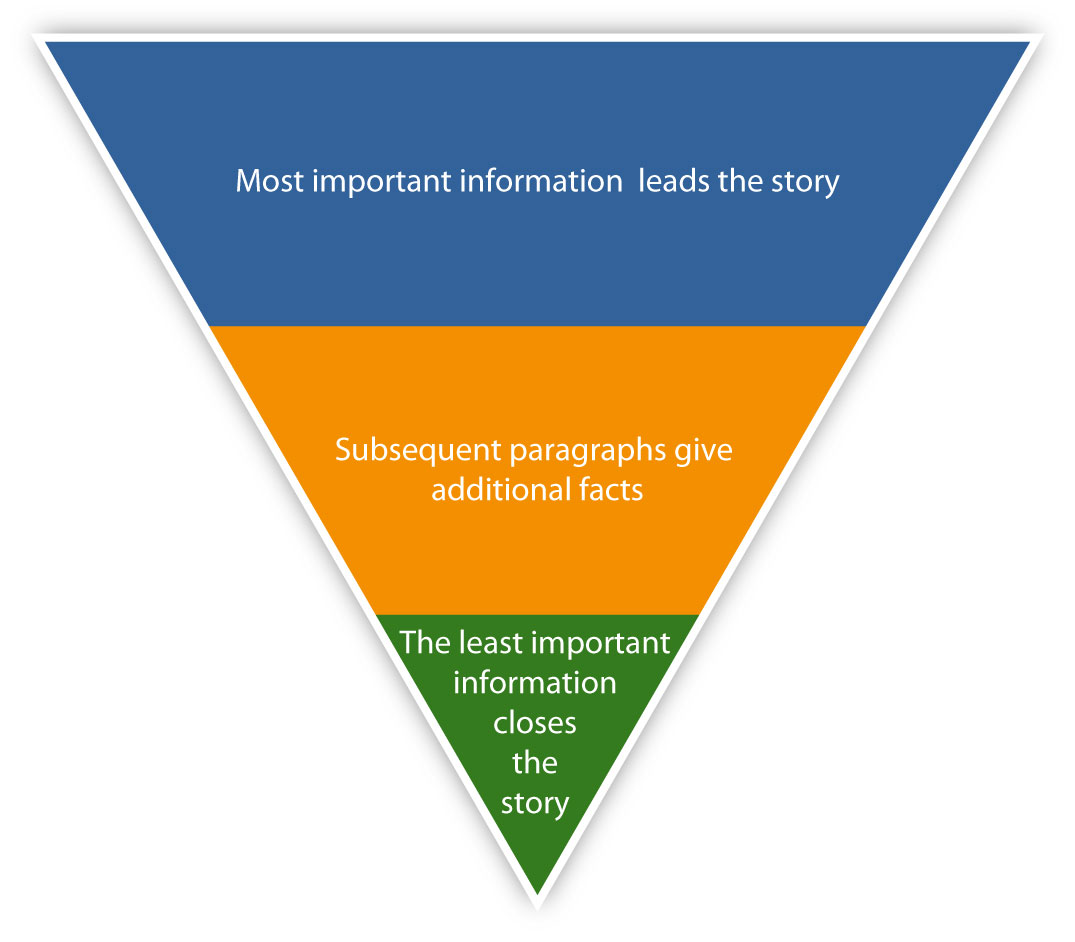
In contemporary journalism, the inverted pyramid remains essential for three reasons. First, it allows journalists to draft concise reports rapidly under tight deadlines. Second, it enables editors to edit stories quickly across print and digital platforms by cutting the story from the bottom without losing vital information. Third, it aligns with modern reading habits: whether scanning a print front page or scrolling on a mobile device, audience members can digest core facts instantly.
Interpretive Journalism
During the 1920s, objective journalism came under scrutiny as the world became increasingly complex. Even though The New York Times continued to thrive, readers craved more than dry, objective stories. In 1923, Time magazine launched as the first major publication to depart from simple objectivity, aiming to provide readers with a more nuanced and analytical interpretation of the news. As Time grew, newspapers began introducing weekend news syntheses, analytical columns, and specialized beat reporting. This approach became known as interpretive journalism.
As media scholar Stephen J. A. Ward notes in his article, “Journalism Ethics,” interpretive reporting “supplemented objective reporting with an informed interpretation of world events.” Brant Houston, a veteran investigative journalism professor and co-founder of the Institute for Nonprofit News, said an interpretive journalist “goes beyond the basic facts of an event or topic to provide context, analysis, and possible consequences.” In modern newsrooms, interpretive techniques are vital for explaining intricate issues such as global supply chains, economic policy, and technological shifts. However, news organizations must clearly distinguish analytical reporting from opinion content.

Competition From Broadcasting
The 1930s saw the rapid growth of broadcasting as radio sets became standard features in American households and sound newsreels became a fixture in movie theaters. This broadcast revolution introduced new dimensions to journalism, transforming how audiences received news. Media scholar Michael Schudson observed that broadcast news reflected “a new journalistic reality. The journalist, no longer merely the relayer of documents and messages, has become the interpreter of the news.”
While radio accelerated the rise of interpretive journalism, it simultaneously posed a direct financial threat to print media. For the first time, free over-the-air broadcasts competed directly with paid newspaper subscriptions. Media scholar Robert W. McChesney notes that during the 1930s, “many elements of the newspaper industry opposed commercial broadcasting, often out of fear of losing ad revenues and circulation to the broadcasters.”
This tension erupted into a media war. Newspaper publishers accused radio stations of copying stories straight from print editions without permission and pressured wire services like the Associated Press to restrict content sent to broadcasters. Broadcasters pushed back, asserting their right to cover public events and positioning their medium alongside print as an essential component of press freedom.
By the 1950s, the widespread adoption of television added a powerful visual element to news, competing even more aggressively for audience time and advertising revenue. To differentiate themselves from immediate TV news bulletins, newspapers leaned heavily into analysis, perspective, and commentary. Publications increased their run of signed opinion columns, culminating in the 1970s with the standardization of dedicated “op-ed” pages (short for “opposite the editorial page”) featuring diverse, non-editorial staff contributors.
By the late 1960s, interpretive reporting and commentary had largely displaced pure descriptive summary in major newspapers. This pivot laid the groundwork for today’s hybrid media environment, where news organizations use specialized newsletters, podcasts, and opinion verticals to provide the depth and distinct voice that general broadcast and digital headlines cannot match.
Literary Journalism
Stemming from the growth of interpretive reporting, literary journalism emerged in the 1960s as a major movement in American writing. Often referred to as New Journalism, this style applies literary and narrative techniques—such as scene-by-scene reconstruction, extended dialogue, character development, and vivid detail—to factual reporting. Crucially, literary journalism does not invent facts; rather, it uses the immersive storytelling tools of fiction to present real-world events with dramatic resonance and emotional depth.
Important Literary Journalists
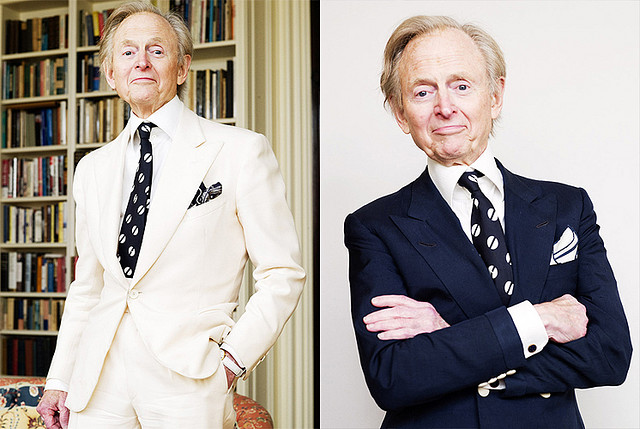
Tom Wolfe became a central figure in literary journalism in 1963 during a New York newspaper strike. Assigned by Esquire to write about customized car culture, Wolfe struggled to fit his extensive research into traditional journalistic formulas. At the suggestion of managing editor Byron Dobell, Wolfe typed up a 49-page informal memo detailing his observations. Dobell removed the “Dear Byron” opening and published the text as “There Goes (Varoom! Varoom!) That Kandy-Kolored Tangerine-Flake Streamline Baby.” The piece demonstrated how a reporter could fuse meticulous reporting with an expressive, personal voice. When he later returned to work at The New York Herald Tribune after the strike, Wolfe brought with him this new style, “fusing the stylistic features of fiction and the reportorial obligations of journalism.”
In 1966, Truman Capote responded to Wolfe’s new style by writing In Cold Blood, which Capote termed a “nonfiction novel.” The tale of an actual murder that had taken place on a Kansas farm some years earlier, Capote based the novel on numerous interviews and painstaking research. Capote claimed that he wrote the book because he wanted to exchange his “self-creative world…for the everyday objective world we all inhabit.” Critics praised the book for its straightforward, journalistic style. New York Times writer George Plimpton claimed that the book “is remarkable for its objectivity—nowhere, despite his involvement, does the author intrude.” After In Cold Blood was finished, Capote criticized Wolfe’s style in an interview, commenting that Wolfe has “nothing to do with creative journalism” by claiming that Wolfe did not have the appropriate fiction-writing expertise. Despite the tension between these two writers, they are now remembered for inspiring a similar style in various genres.
Other key figures of this movement included Joan Didion, Hunter S. Thompson (see below), Gay Talese, and Norman Mailer.
When the going gets weird, the weird go pro: New Journalism vs. Hunter S. Thompson’s Gonzo Journalism

One of the most eccentric figures in 20th-century American media, Hunter S. Thompson created a radical offshoot of New Journalism known as Gonzo journalism. This style pushed subjectivity to its absolute limit, placing the writer directly at the center of the story as both participant and primary narrative filter. Characterized by a highly stylized first-person voice, hyperbole, stream-of-consciousness prose, and sharp social critique, Gonzo journalism abandoned traditional distance to capture an impressionistic, unfiltered reality.
Born in Louisville, Kentucky, in 1937, Thompson honed a rebellious writing style early in his career. His breakout book, Hell’s Angels: The Strange and Terrible Saga of the Outlaw Motorcycle Gangs, resulted from a year spent living and riding with the group. Rather than reporting from a detached perspective, Thompson documented the experience from the inside. He fully solidified the Gonzo style with his landmark 1970 article for Scanlan’s Monthly, “The Kentucky Derby Is Decadent and Depraved,” illustrated by artist Ralph Steadman, whose distorted drawings matched Thompson’s frantic prose.

Thompson’s 1971 masterpiece, Fear and Loathing in Las Vegas: A Savage Journey to the Heart of the American Dream, cemented his legacy. Chronicling a drug-fueled trip to cover a desert motorcycle race and a district attorneys’ conference, the work blended immersive reportage, political satire, and hallucinatory prose to critique American culture at the close of the countercultural era. Thompson’s public persona—complete with aviator sunglasses, cigarette holder, and his near-successful 1970 campaign for sheriff of Pitkin County, Colorado, on the “Freak Power” ticket—turned him into a cultural icon.
While both New Journalism and Gonzo journalism emerged in the 1960s to challenge rigid objectivity, key distinctions separate them. Traditional New Journalists like Tom Wolfe or Gay Talese used novelistic techniques—such as scene building and dialogue—to portray third-party subjects neutrally or critically. In contrast, Gonzo journalists become the central character of the story, using extreme first-person participation, humor, and satire to process events.
Though personal struggles and a tragic end marked Thompson’s life, his Gonzo legacy persists across first-person video journalism, immersive documentaries, and participatory digital channels where the creator’s subjective experience serves as the lens through which audiences understand the world.
The Legacy and Evolution of Literary Journalism

Literary journalism found its primary home in magazines like Esquire, The New Yorker, and Harper’s Magazine, where longer deadlines and flexible word counts allowed writers to develop complex stories. Over time, the approach fundamentally expanded the boundaries of journalism, demonstrating that factual reporting could offer deep psychological and social insight beyond the constraints of the inverted pyramid. Many literary journalists believed that objectivity limited their ability to critique a story or a writer. Some claim that objective writing remains impossible, as all journalists have their personal histories that may sway their coverage. Still others, including Wolfe, argued that objective journalism conveyed a “limited conception of the ‘facts,’” which “often effected an inaccurate, incomplete story that precluded readers from exercising informed judgment.”
Today, literary or creative nonfiction reporting remains vibrant across both print and digital media. Authors such as David Grann (Killers of the Flower Moon), Susan Orlean, and Ta-Nehisi Coates continue this tradition in books and digital magazines. Furthermore, the storytelling conventions of literary journalism have heavily influenced modern narrative audio podcasts (such as Serial and This American Life) and long-form investigative digital outlets like ProPublica and The Atavist, proving that character-driven narrative remains one of the most effective ways to engage audiences with complex real-world issues.
Advocacy Journalism and Precision Journalism
In contrast to the rigid neutrality of objective reporting, two distinct models emerged in the late 20th century to address different limitations of traditional newsgathering: advocacy journalism and precision journalism.
Advocacy journalism promotes a particular cause and intentionally adopts a biased, nonobjective viewpoint to do so effectively. However, serious advocate journalists adhere to strict guidelines, as “an advocate journalist is not the same as being an activist,” according to journalist Sue Careless. In an article on advocacy journalism, Careless contrasted the role of an advocate journalist with that of an activist. She encourages future advocate journalists by saying the following:
A journalist writing for the advocacy press should practice the same skills as any journalist. You don’t fabricate or falsify. If you do you will destroy the credibility of both yourself as a working journalist and the cause you care so much about. News should never be propaganda. You don’t fudge or suppress vital facts or present half-truths.
Today, advocacy and solutions journalism have expanded through specialized, mission-driven publications and investigative verticals. Outlets like Inside Climate News, The Marshall Project (focusing on criminal justice reform), and various nonprofit newsrooms practice transparent, value-driven journalism. These organizations do not hide their focus on specific societal issues, but they build credibility by grounding their advocacy in rigorous, verifiable reporting.
Data journalism emerged in the late 1960s and 1970s. Philip Meyer, commonly acknowledged as the father of precision journalism, says that he intended to “encourage my colleagues in journalism to apply the principles of scientific method to their tasks of gathering and presenting the news.” Following the 1967 Detroit riots, Meyer used mainframe computers and survey research to analyze the underlying social causes of the unrest. His analysis helped pave the way for journalism to move beyond anecdotal claims toward empirical proof.
Over the past four decades, precision journalism evolved into computer-assisted reporting in the 1980s and 1990s, and ultimately into modern data journalism. Rather than relying solely on official statements or isolated interviews, contemporary data journalists analyze massive databases, conduct algorithmic audits, build interactive maps, and evaluate statistical models. Outlets such as ProPublica and The New York Times Upshot represent the modern fulfillment of precision journalism, using empirical data to hold institutions accountable and make complex global trends understandable.
Niche, Alternative, and Community Media
Rather than attempting to serve a broad general audience, many print and digital publications focus exclusively on specific demographic, geographic, or cultural groups. As media educator Robert Courtemanche notes, the legacy model where a single paper tries to be “everything to every reader” has largely been replaced by audience segmentation, where readers seek out specialized, expert content tailored to their specific identities and interests.
Ethnic and Multicultural Media
Ethnic, immigrant, and language-specific publications represent some of the most vital niche media in North America. In major urban centers, papers and digital outlets catering to Spanish, Chinese, Korean, Arabic, and Haitian Creole-speaking communities provide essential local coverage, immigration guidance, and community news ignored by mainstream outlets. LGBTQ+ publications—such as The Advocate (founded in 1967 as a print newspaper and now operating as a major digital platform with a bi-monthly print edition)—and faith-based media like The Christian Science Monitor (which shifted from a daily newspaper to a web-first publication and weekly magazine) serve similar specialized roles.
The Alternative and Underground Press

The alternative press developed to provide platforms for political, social, and cultural perspectives marginalized by mainstream commercial media. Unlike general-interest newspapers driven by advertiser appeal to broad audiences, alternative publications historically prioritized counter-cultural commentary, investigative journalism, and local arts criticism.
During the late 19th century, political movements like the Populist Party—facing a near-total blackout from major daily newspapers—established over 100 independent journals to communicate directly with farmers and workers and share its platform and concerns. In 1955, The Village Voice launched in New York City, pioneering the modern alt-weekly format with passionate, subjective, and no-holds-barred cultural reporting. Though The Village Voice ended its weekly print edition in 2017 amid broader industry decline, its investigative and cultural legacy established a template for city weeklies nationwide.
During the 1960s and 1970s, a distinct subgenre known as the underground press flourished around college campuses, major cities, and military bases. Publications like the Los Angeles Free Press, The Berkeley Barb, and Chicago Seed operated on shoestring budgets and adopted explicit anti-establishment stances. They covered the anti-Vietnam War movement, civil rights, radical politics, countercultural art, and drug culture.
Because these publications actively challenged government policy and societal norms, they faced significant hostility—including federal surveillance under the FBI’s COINTELPRO program aimed at suppressing political dissent. Despite constant financial and legal pressure, the underground press fundamentally altered American journalism by proving that independent, grassroots publications could shape public discourse and give voice to marginalized communities. Today, that radical spirit persists in worker-owned media cooperatives, independent digital publications, and grassroots newsletters.
The Evolution of Magazines
Over the last century, magazines transformed from broad, general-interest publications into highly specialized, niche media. This evolution began in the mid-20th century as television displaced magazines as the primary medium for mass entertainment and national advertising. To survive, magazine publishers pivoted away from trying to appeal to everyone and instead targeted specific demographic, professional, and cultural niches.
Advertisers embraced this shift, recognizing that specialized magazines allowed them to reach highly targeted audiences based on age, profession, hobbies, and lifestyle preferences. In the digital age, this trend toward specialization has only intensified, with print magazines functioning as premium, targeted products alongside digital verticals, email newsletters, and specialized online communities. As writer Jennifer Hess notes, “Market fragmentation has and probably will continue to proliferate. Customization and individualization will probably be the continuing trend.”
Professional Trade Publications

Nearly every industry produces specialized trade publications tailored to its workforce and leadership. These periodicals—ranging from Nation’s Restaurant News to Architectural Record—focus on industry trends, regulatory changes, and technical innovations. Major institutions, such as the National Agricultural Library in Maryland, archive vast collections of these trade publications, which remain essential resources for professional research and vertical business-to-business advertising.
Scholarly Publications
Academic journals have provided peer-reviewed research since the 17th century, when the Universal Historical Bibliothèque became the first journal to invite scholarly contributions. Today, thousands of scholarly journals exist across every academic discipline, including The American Economic Review and The New England Journal of Medicine.
Scholarly journals rely on a rigorous peer-review process, where panels of expert scholars evaluate anonymous submissions for accuracy, methodology, and original contribution before publication. While historically accessed via physical university library stacks, scholarly publishing has shifted dramatically toward digital databases (such as JSTOR and EBSCO) and open-access digital repositories.
Religious Magazines
Religious publications offer dedicated commentary and community news for faith traditions worldwide. Outlets like Christianity Today, Catholic Digest, Hadassah Magazine (serving Jewish readers), and Lion’s Roar (Buddhist) provide platforms for faith-based dialogue. Multi-faith journals, such as CrossCurrents, bridge intellectual inquiry and diverse religious traditions, catering to specific theological and ethical discussions.
Political Magazines
Political periodicals have long served as ideological flagships. Outlets like The National Review (conservative) and The American Prospect or The Nation (progressive) provide in-depth commentary and policy analysis that shape partisan discourse. In the modern media landscape, these traditional print journals maintain vibrant digital platforms and podcast networks to engage politically active audiences.

Pulp and Genre Fiction Magazines

In the late 19th century, publisher Frank Munsey popularized pulp magazines—low-cost fiction periodicals printed on cheap wood-pulp paper. Suddenly, individuals had the opportunity to read popular genre fiction in a low-cost magazine format, such as Adventure, Horror Stories, Startling Stories, and Weird Tales.
The pulps got their start as adventure magazines, but they eventually diversified into several categories, including love, detective, and western. Although intended for children, the violent, horror-soaked comics drew a large adult audience. However, the graphic content of the pulp strips caused a stir, with the public divided on the nature of this new medium. Just as legislators struggle today with debates over censorship of TV, music, and the Internet, they did so with pulp comics as well. Child psychologist Fredric Wertham, who alleged that comics led children into lives of crime, encouraged negative backlash against pulp comics. In response to the controversy, the Association of Comics Magazine Publishers established a Code of Practice in 1948 to regulate the content of pulp comics. Due to lax enforcement, many publishers chose to ignore the code, and thus the controversy continued to rage. When Senate hearings raised the threat of government regulation in 1954, the pulp comics industry opted for self-censorship. As a result, it established the Comics Code Authority to regulate the material reaching consumers.
While mass-market pulps declined mid-century, specialized genre magazines continue to foster literary talent. Legacy titles such as Ellery Queen’s Mystery Magazine and Asimov’s Science Fiction continue to publish print and digital editions, serving as vital gateways for emerging fiction writers.
Entertainment and Fan Magazines

Early 20th-century fan magazines like Photoplay offered behind-the-scenes glimpses of Hollywood stars. As television and music expanded, magazines like TV Guide and Rolling Stone became dominant cultural forces. Today, general entertainment reporting has largely migrated online to social media and digital platforms. Publications that survived this shift—such as Entertainment Weekly—have adapted by transitioning from weekly print issues to digital-first coverage with specialized print collector’s editions.
Teen and Youth Magazines
Pioneered in the 1940s with titles like Seventeen, youth magazines historically targeted teens with fashion, pop culture, and lifestyle advice. However, this sector underwent radical digital disruption. Print mainstays like YM and Teen People ceased publication. At the same time, Teen Vogue famously eliminated its print edition in 2017 to become a web-first publication focused on youth activism, culture, and politics, demonstrating how print brands must reinvent themselves to reach younger digital natives.
Celebrity Magazines
Popularized in the 1970s, celebrity newsweeklies expanded coverage of public figures and entertainment culture. (Note: Because celebrity magazines represent a major commercial sector of print and digital media, their business models, coverage tactics, and circulation trends are analyzed in detail later in this chapter.)
Hobby, Interest, and Lifestyle Magazines
Special-interest magazines cover virtually every personal passion, including sports (Sports Illustrated), culinary arts (Bon Appétit), home design (Architectural Digest), and fashion (Vogue).
While niche magazines typically have smaller circulations than old mass-market periodicals, their highly dedicated readerships make them valuable to targeted advertisers. Furthermore, many hobbyists prefer tactile, high-production print magazines over digital screens, driving a resurgence in premium, independent print quarterlies focused on art, slow journalism, and specialized crafts.


